
What Does the Village Need You For?
Before there were nations, companies, churches, or schools, there was a fire with people around it.
Every human alive descends from bands that survived — and the ones that survived were the ones where, when night came, knew they’d served a purpose. Somebody had food put away; somebody had caught what could be caught; somebody stood watch; somebody’s tools held together; somebody tended the sick; somebody told the stories; somebody made many hands into one thing; and somebody covered whatever gap opened when any of the others went down.
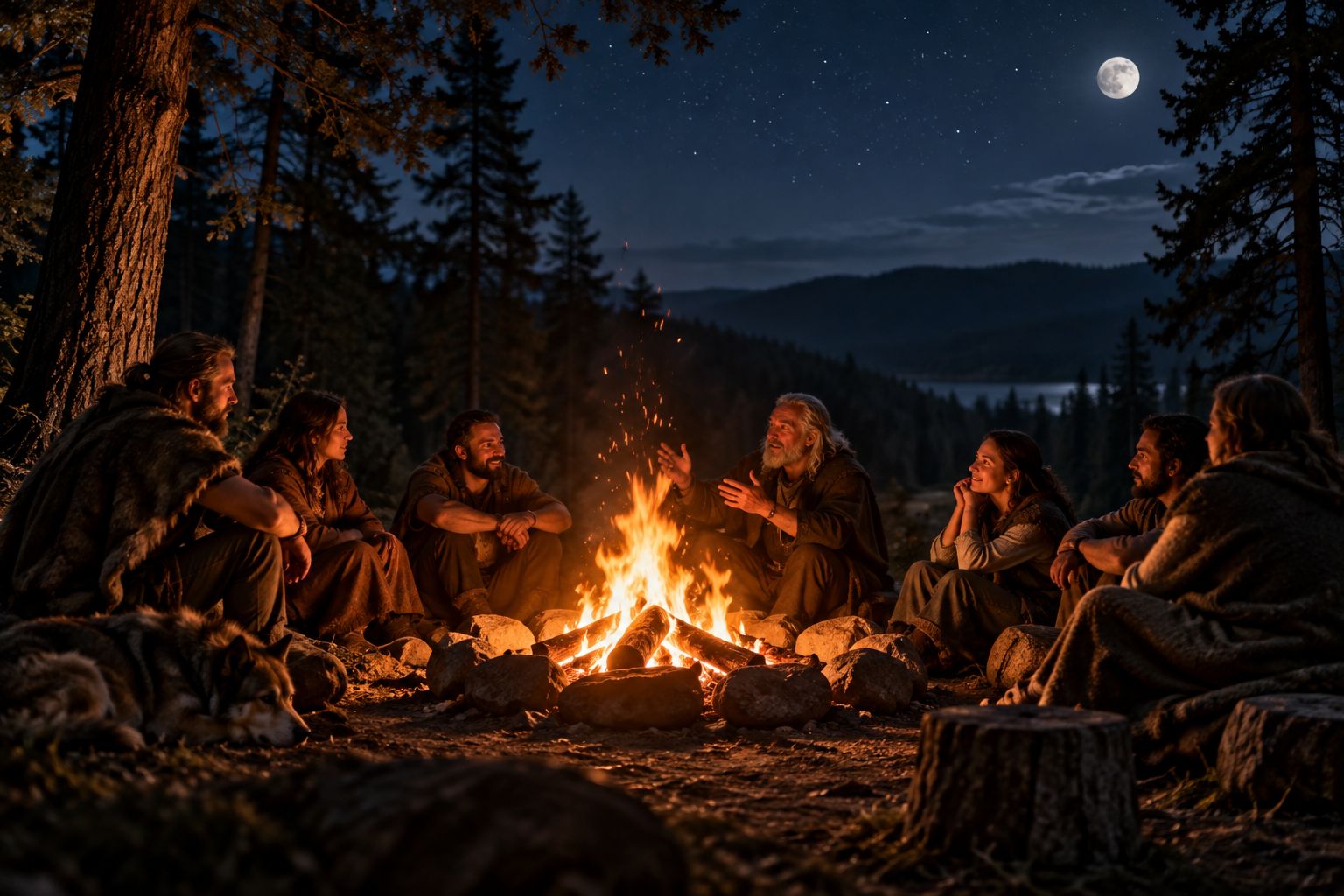
That’s not a poetic list. It’s a survival checklist. It’s been graded pass-fail for as long as there have been winters.
Here’s the thing I’ve become convinced of: those seats around the fire never went away. The village became the city, the company, the family, the crew — better plumbing, same arrangement. Every one of us is still built so fill one of those seats. Not assigned to it. Built for it.
I call them Village Temperaments. The seats include those filled by the Farmer, the Hunter, the Warrior, the Cleric, the Artist, the Smith, the Chief, and the Floater. Eight engines, each running on a different fuel. The farmer is fed by things that grow. The hunter is fed by the pursuit. The warrior is fed by real stakes. The cleric is fed by people healing. The artist is fed by the moment you finally see it. The smith is fed by things that work. The chief is fed by the whole group winning. The floater is fed by wearing every hat in the building.
You likely do all eight, every day. Everybody does. But one of them fuels you, and the rest cost you. That difference is your temperament.
Now here’s the part that took me longer to see, and it’s the part I think matters most:
When your engine has nothing to run on, it doesn’t shut off. It misfires — in a shape as recognizable as the engine itself.
The warrior with no war picks fights in traffic. The hunter with nothing to chase goes gray and flat. The chief with no system to run starts micromanaging the garage. The finder with nothing to find buys things for the thrill alone, right up until the pile owns them. The tender with no one to tend holds people a little closer than they needed to be held.
We look at those misfires and we call them character flaws. Anger problems. Laziness. Bossiness. Being “too much.” I’d argue most of them are something else entirely: a perfectly good engine, running on empty, in a world that never asked what it was for.
That question “what does the village need you for?” is the whole idea. Not “what are you like?” Not “what’s your personality?” What seat around the fire is yours, what feeds it, and what does it do when it starves?
I’ve built a test for it. Some family and friends have been taking it in recent days, testing it for me, with results that are promising. Further tweaks are ongoing before I release it for general use soon. There’s a book coming which I will tell you more about soon, too. And there’s a lot more to say: about why some seats get honored and others get diagnosed, differences between different engines, about how to feed your own when your job won’t and more. All very exciting stuff.
In addition to short stories, that’s what this space is going to be about for a while. Next time, I’ll walk you through the eight seats one by one, and I’d bet money you recognize your whole family before we’re halfway through the list.
Until then, I’ll leave you with one question to sit with. Answer honestly, for yourself, because it’s the whole test in miniature:
What do you catch yourself doing when life goes flat and nothing’s feeding you?
That’s not your bad habit. That’s your engine, telling you what it’s for.
By the way, if you wonder what qualifies me to understand people on this level, it’s simple: Years of creating people who feel as real on a page as the people we meet in real life. Authors spend our whole existence in the pursuit of understanding human behavior. We have to.