
Village Temperaments: The Farmer
This is part of an ongoing series on Village Temperaments. In the first post, “What Does the Village Need You For?,” I introduced the idea that every one of us is built to fill one of eight seats around the village fire, and that each seat runs on its own kind of fuel. In the second, “The Eight Seats Around the Fire,” I gave you a quick look at all eight: the Farmer, the Hunter, the Warrior, the Cleric, the Artist, the Smith, the Chief, and the Wright. Now we’re taking them one at a time: what each seat did for the first villages, where it lives today, what it looks like fed, what it looks like starving, and how to feed it when your life won’t. We start where civilization did, with the Farmer.
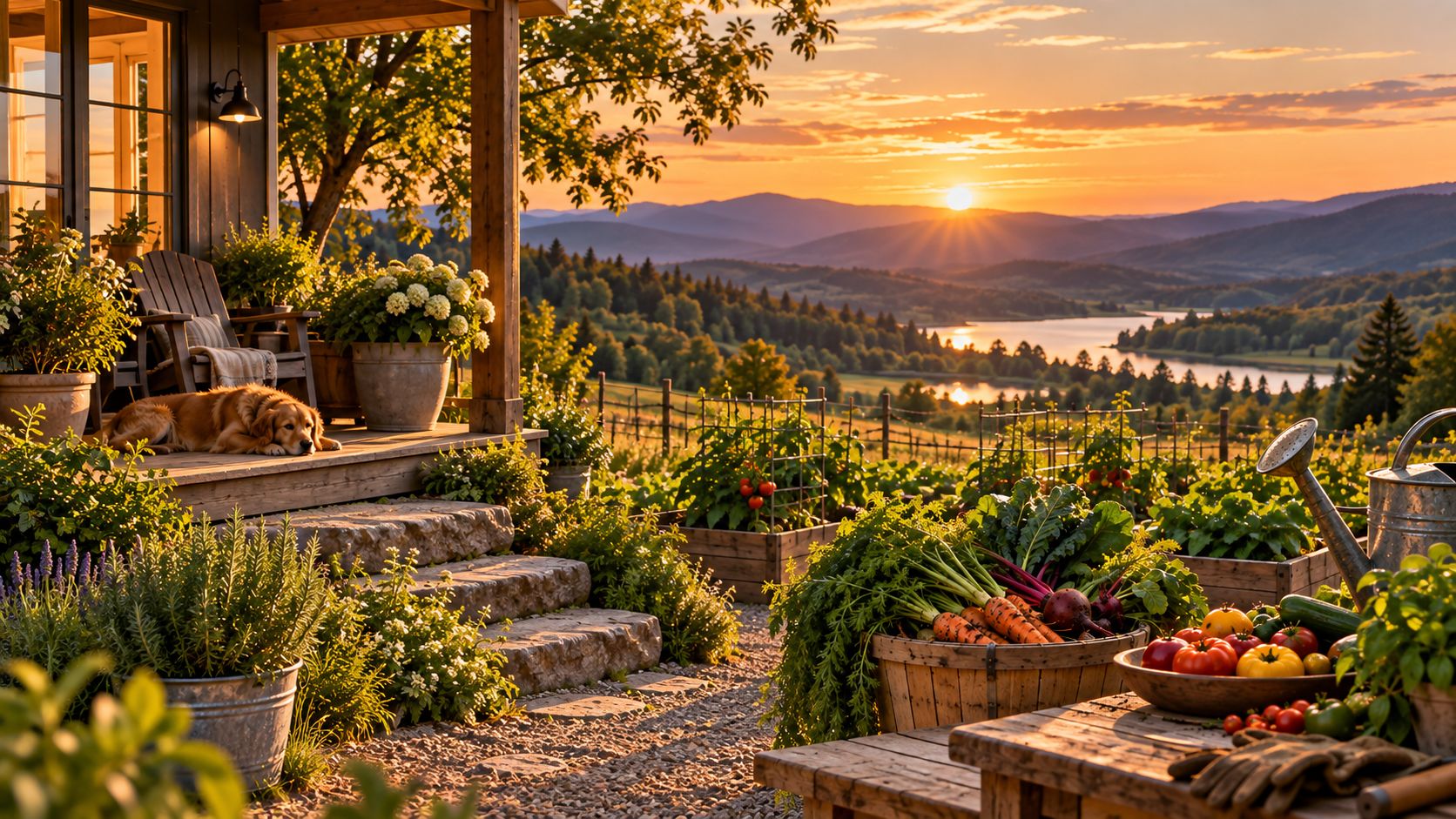
Every village that survived a hard winter survived it because, months earlier, somebody was thinking about February while everyone else was enjoying June.
That somebody was the Farmer.
Around the First Fires
Long before there were plowed fields, the Farmer was the one who noticed. The Farmer noticed which roots came back to the same hillside every year; which seeds sprouted where they’d been dropped; and which grain kept through the cold if you kept it dry.
The Farmer didn’t invent patience. The Farmer is built out of patience.
When the village learned to plant, to store, and to stay in one place long enough to call it home, the person or people in this seat made it happen. The first seed saved instead of eaten was saved by a Farmer. Eating the seed corn is one of the oldest ways a village dies, and in every village that didn’t, someone stood between the hungry and the seed and said, No. That’s next year.
That’s the Farmer’s job. Everyone else keeps the village alive today. The Farmer makes sure there is a next year.
Where You’ll Find Them Today
You’ll find Farmers in gardens, of course, and on ranches, in orchards, and on family land held for four generations. But you’ll also find them in the retirement account opened at twenty-two, in the pantry stocked for a storm that hasn’t been forecast, in the small business that grew a little every year for thirty years and never once went viral, and in the person who has kept the same houseplant alive since college.
Farmers are rarely the loudest people in the room. The village often doesn’t notice them until winter, when it turns out someone was ready.
The Farmer’s fuel is things that grow. Not things that are finished, but things that are becoming. The Farmer is fed by watching something deepen under their care, slowly, season after season. That’s a reward most people don’t have the patience to wait for. The Farmer isn’t waiting. For the Farmer, the growing is the reward.
Farmers come in two kinds.
The Cultivator
The Cultivator picks a field and tends it.
The field might be literal. It might also be a craft, a body of knowledge, a business, an investment, a vineyard, or a piece of land they know better than anyone alive. What makes someone a Cultivator isn’t what they tend to, but why. The Cultivator is fed by depth, by watching one thing become more than it was because they stayed with it.
Around the first fires, the Cultivator was the one who worked the same ground year after year and learned its moods: where the water pooled, which corner froze first, what the soil needed and when. Today, the Cultivator is the person who has done one thing for thirty years and is still getting better at it, and who can tell you exactly how the thing has changed because they were there for all of it.
The Cultivator gives the village depth. Without them, everything stays shallow: started often, finished rarely, known by no one all the way down.
The Gatherer
Before the planted field, there was the gathered one.
The Gatherer knows what’s ripe and where. They know which bushes fruit in which week, which creek bend has the cress, and which grove drops its nuts after the first frost. The Gatherer walks out with an empty basket and walks back with a full one, and they’re fed by exactly that: the find, the haul, the harvest brought in and put away.
Today, the Gatherer is the collector, the thrift-store savant, the one who always knows where to get it cheaper. The Gatherer is the friend with spare batteries, spare chargers, and a spare of everything else. They’re the one who hears about the opportunity first and gets there before it’s picked over.
Where the Cultivator makes things grow, the Gatherer knows where things are already growing and brings them home. The Gatherer gives the village reserves. When the village runs short, it’s the Gatherer who says, I’ve got some put away.
When the Farmer Is Fed
A fed Farmer is one of the steadiest people you’ll ever meet. They’re calm because the future feels handled. They’re generous because they’re giving from surplus. They sleep well. They tend to be the quiet reason a family, a crew, or a company makes it through the lean years without anyone quite realizing how close they came to failing.
When the Farmer Starves
The modern world is hard on Farmers. Everything runs on quarters, notifications, and next-day delivery. Jobs change every few years. People rent, move, and start over. Nothing stays yours long enough to grow.
And a Farmer with no field doesn’t stop farming. They misfire.
The starving Cultivator tends the wrong things too hard. They edge the lawn with scissors. They turn worry into a daily practice, running plans for every possible future without ever planting one. They start pruning the people around them, managing other people’s growth when nobody asked them to. They resist every change, because to a Cultivator with only one small field left, change feels like a crop failure.
The starving Gatherer gathers for the gathering alone. They buy things for the thrill of the find, right up until the pile owns them. There’s the storage unit full of deals, the closet of things bought because they were a steal, and the hunt for bargains on things nobody in the house will ever use.
We call these things anxiety, control issues, cheapness, and hoarding. Sometimes that’s exactly what they are doing. But very often, they’re a planter with no field, doing the only thing it knows how to do with whatever’s in reach.
Starve a Farmer long enough and something worse happens: they stop planting at all. We’ll talk about that another time.
Feeding the Farmer When Life Won’t
You can’t always change your job or your circumstances. You can almost always find a field.
Plant something that takes a season. Make it literal if you can: a garden bed, a pot on a balcony, a fruit tree you’ll wait three years for. If you can’t, choose a skill, a savings goal, or a project with no deadline and no finish line, only growth.
Stay with something. The Farmer is fed by time spent with one thing. Protect at least one field from the churn, whether that’s a practice, a place, or a long-term goal. Keep tending it through the seasons when nothing seems to be happening.
Mark the growth. Farmers starve when they can’t see anything deepening. Keep a record, a journal, or a photo from the same spot every spring. Let yourself see how far the thing has come.
If you’re a Gatherer, give the gathering somewhere to go. Gather for someone, like a food pantry, a family member setting up a first home, or a neighbor who’s short. Curate instead of accumulating: a small collection of excellent things will feed you better than a garage full of good deals.
Put the planning to work. Your mind already lives in February. Let it plan something real: the family’s emergency fund, next year’s garden, the business’s long game. A Farmer’s worry is only foresight that hasn’t been given a job.
*****
The Farmer rarely gets thanked in June. If they get thanked at all, it’s in February, when the snow is deep and the stores are full and someone finally asks, Who thought of this?
So here’s the question for this week:
What have you kept alive the longest, and how did it feel when you realized it had grown?
Next time: the Hunter.