
Village Temperaments: The Hunter
This is part of an ongoing series on Village Temperaments. In the first post, “What Does the Village Need You For?“, I introduced the idea that every one of us is built to fill one of eight seats around the village fire, and that each seat runs on its own kind of fuel. In the second, “The Eight Seats Around the Fire,” I gave you a quick look at all eight: the Farmer, the Hunter, the Warrior, the Cleric, the Artist, the Smith, the Chief, and the Wright. Now we’re taking them one at a time: what each seat did for the first villages, where it lives today, what it looks like fed, what it looks like starving, and how to feed it when your life won’t. Last time was the Farmer, who plants for next year. This time it’s the one who goes out and brings back what can’t be grown: the Hunter.
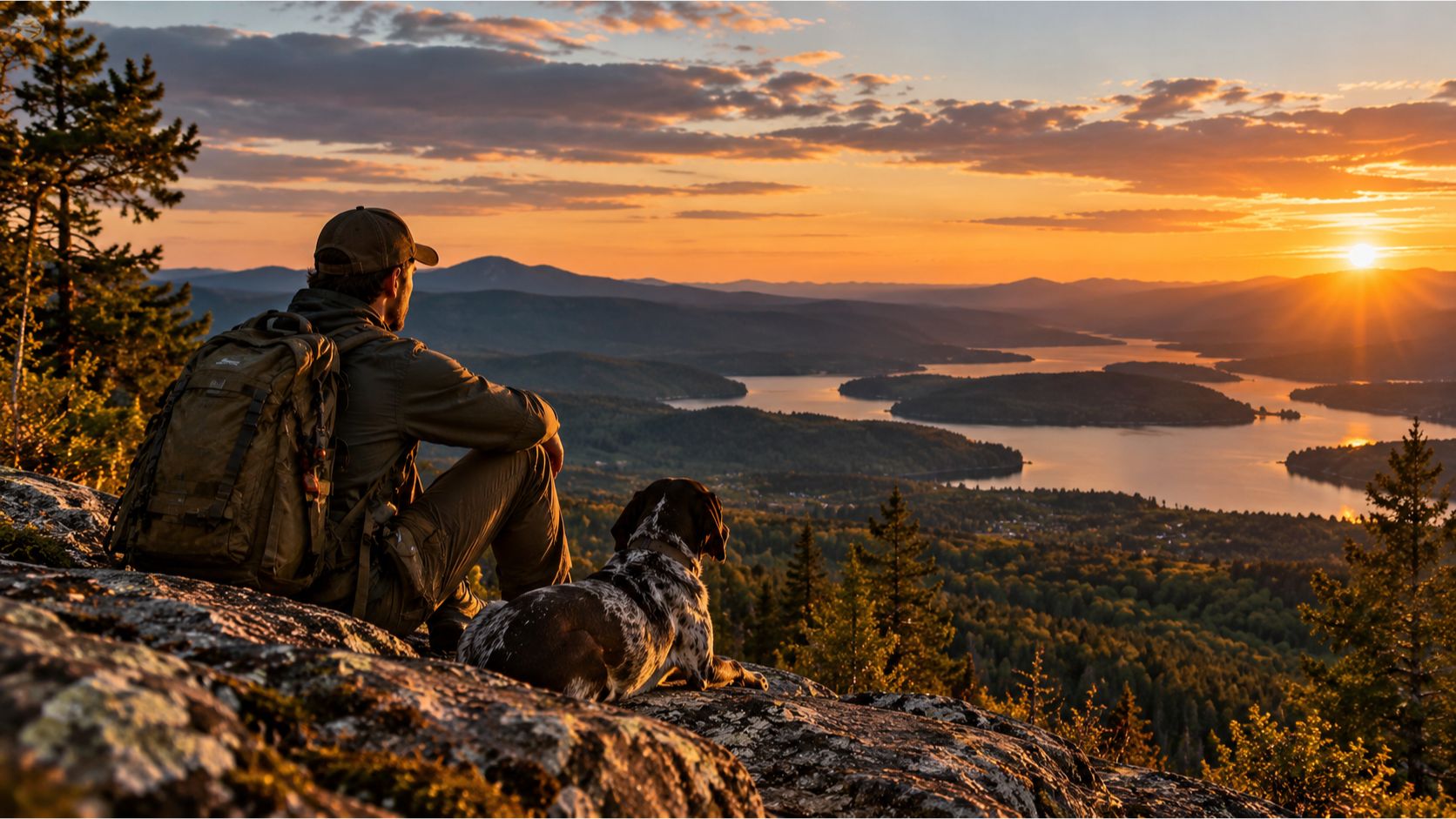
The Farmer can promise the village a next year. What the Farmer can’t promise is meat in the pot tonight.
For that, somebody has to leave the fire, go out into the cold, and come back with something the village didn’t have this morning.
That somebody is the Hunter.
Around the First Fires
For most of human history, the hunt was the difference between a thin winter and a dead one. Grain kept you alive. Meat, fat, and hide kept you strong, warm, and clothed. None of it walked up to the fire on its own.
The Hunter’s job was to go get it. That meant reading tracks, wind, and the animal, waiting when waiting was right, moving when moving was right, and then carrying the whole thing home.
But the Hunter brought back more than meat. The Hunter came back with news: where the herds had moved, which valley had water, and who was camped on the other side of the ridge. The Hunter came back with trade, flint from far away, and shells from the coast. The Hunter is how the outside world got into the village.
Where You’ll Find Them Today
The hunt never ended. It moved indoors.
You’ll find Hunters closing sales, chasing leads, recruiting talent, and tracking down the source nobody else could find. They’re in newsrooms, in emergency rooms, on trading floors, in search-and-rescue, and at the auction with a paddle in their hand. They’re the ones who light up when a deadline gets moved up.
The Hunter’s fuel is the pursuit. Not the prize; the pursuit. A Hunter who wins is happy for an evening. A Hunter who is closing in is happy all day. That’s why Hunters often seem strangely restless right after a big win. The chase is over, and the chase was the point.
Hunters come in three kinds.
The Chase-Hunter
The Chase-Hunter runs things down.
Around the first fires, this was the one who could track an animal for a day and a half and still have the legs to finish. The Chase-Hunter is fed by motion, speed, and the closing distance between themselves and what they’re after.
Today, the Chase-Hunter is the closer, the deal-maker, the competitor, and the one who wants the ball with ten seconds on the clock. They don’t mind the pressure. The pressure is the fuel.
The Chase-Hunter feeds the village today. When something needs to be brought in right now, they’re the one you send.
The Trapper
The Trapper doesn’t run. The Trapper thinks.
Around the first fires, the Trapper learned the animal’s habits so well that they could set a snare on the trail and let the animal come to them. The Trapper’s catch came in while they were sleeping, and it came in again the next night, and the night after that.
Today, the Trapper is the investor who builds a position and waits, the researcher designing the experiment that will finally catch the answer, the marketer building the system that brings customers in on its own, and anyone whose plan keeps working after they’ve gone home. The Trapper is fed by the moment the snare closes and proves they read it right.
The Trapper feeds the village steadily. Where the Chase-Hunter delivers a feast, the Trapper delivers a supply.
The Scout
The Scout goes out ahead.
Around the first fires, the Scout was the one who ranged farthest, finding where the herds had gone, where the water was, where the danger was, and which way the village should move when the seasons turned. The Scout often came back with nothing to eat and everything to know.
Today, the Scout is the explorer, the early adopter, the one who tried the new thing first, the analyst reading the trend before it’s a trend, and the friend who has already been to the place you’re thinking of going. The Scout is fed by discovery: new ground, new information, the first look at something nobody’s seen.
The Scout tells the village where to go next. Without Scouts, a village keeps hunting the same valley long after the herds have left it.
When the Hunter Is Fed
A fed Hunter is electric; focused, sharp, funny, and generous with the take. They come home tired, satisfied, and ready to tell you all about it. They make the people around them feel like something is happening, because with a Hunter around, something usually is.
When the Hunter Starves
Modern life hands most people a routine and calls it security. For a Hunter, a routine with nothing to chase is a slow suffocation.
And a Hunter with nothing to hunt goes gray and flat. That’s the first sign, and it’s the one most people miss. The spark just goes out. They get quiet, bored, and heavy. They sleep too much or not enough. Everything feels like it’s already been decided.
Then, if nothing changes, the Hunter starts manufacturing a chase.
The starving Chase-Hunter reaches for thrills with no purpose: the bet, the risky purchase, the pointless competition with a coworker, or the argument picked just to have something to win. The starving Trapper starts setting snares for people: little schemes, quiet manipulations, and elaborate plans aimed at prey that was never worth the trouble. The starving Scout can’t stop moving: new job, new city, new hobby, new obsession, or simply hours of scrolling for anything new, anywhere, just to feel the ground change underfoot.
We call these things boredom, recklessness, restlessness, or a lack of commitment. Sometimes they are. Very often, they’re a Hunter with no game, and the chase has turned inward.
Starve a Hunter long enough and even the manufactured chases stop. We’ll talk about that another time.
Feeding the Hunter When Life Won’t
Put a chase in your week. Something with a target, a trail, and a finish: a race to train for, a rare find to track down, a skill with a clear test at the end. The size of the prey matters less than the fact that there is prey.
Make the target visible. Hunters starve on vague goals. “Get better at work” is fog. “Land three new clients by March” is a track in the snow. Name the animal.
Chase-Hunters, compete on purpose. Find the league, the leaderboard, the sales contest, the rival who makes you better. Give the need to win somewhere safe and useful to land.
Trappers, build something that catches while you sleep. An investment plan, a side business with a system behind it, a long experiment. Then let yourself enjoy the moment it works.
Scouts, go somewhere new on purpose. It doesn’t have to be far. A new trail, a new neighborhood, a new field of study. Bring back what you find and tell someone. The telling is half the Scout’s job.
*****
The village honors the Farmer’s patience, and it should. But every village that ever thrived also had somebody willing to walk out past the firelight and come back with something new.
So here’s the question for this week:
When was the last time you were closing in on something, and what did it feel like?
Next time: the Warrior.