
Village Temperaments: The Smith
This is part of an ongoing series on Village Temperaments. In the first post, “What Does the Village Need You For?“, I introduced the idea that every one of us is built to fill one of eight seats around the village fire, and that each seat runs on its own kind of fuel. In the second, “The Eight Seats Around the Fire,” I gave you a quick look at all eight: the Farmer, the Hunter, the Warrior, the Cleric, the Artist, the Smith, the Chief, and the Wright. Now we’re taking them one at a time: what each seat did for the first villages, where it lives today, what it looks like fed, what it looks like starving, and how to feed it when your life won’t. Last time was the Artist, who gives the village meaning. This time it’s the one who makes the things that hold: the Smith.
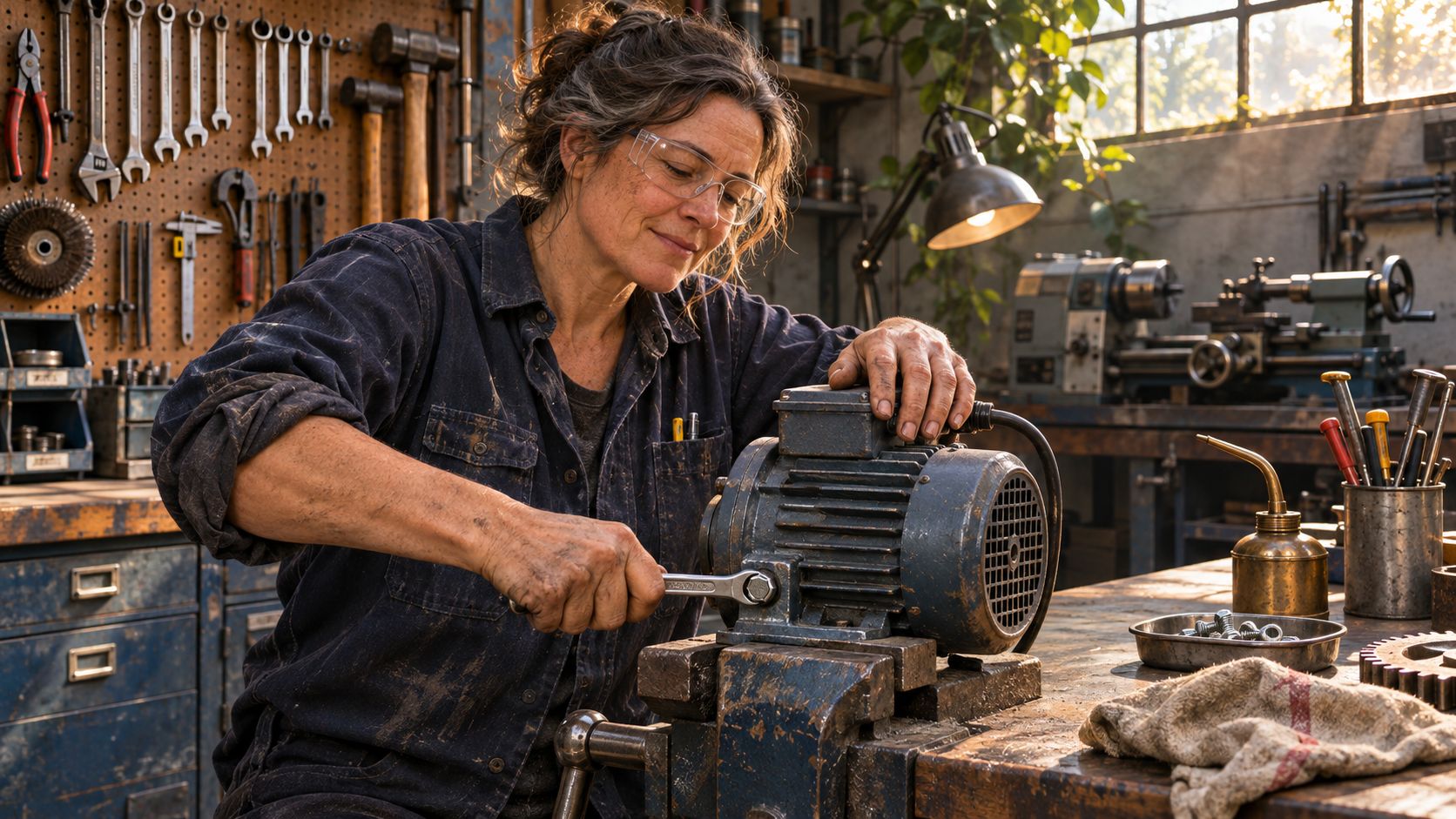
Every other seat around the fire depends on something the Smith made.
The Farmer’s plow. The Hunter’s spear. The Warrior’s blade. The Cleric’s needle. The Artist’s chisel. The roof over all of them, the hinge on the door, and the bridge over the river.
The Smith made them; and the Smith made them work.
Around the First Fires
The first villages ran on tools. A sharper point meant more meat. A better axe meant more wood, more shelter, and more warmth. A stronger pot meant food could be cooked, stored, and carried. Every improvement in a tool was an improvement in the village’s odds.
The Smith was the one who made those tools, kept them sharp, and fixed them when they broke. They understood materials: which stone would flake cleanly, which wood would bend without breaking, and later, how fire and hammer could turn raw ore into iron. They built the shelters, raised the storehouses, and laid the stones.
We like to say civilization was built by Farmers. It was built by Farmers and Smiths alike. The Farmer made it possible to stay in one place. The Smith made it possible to build one.
Where You’ll Find Them Today
You’ll find Smiths in machine shops, garages, and construction sites. You’ll find them in engineering firms, IT departments, labs, and kitchens where the knives are always sharp. You’ll find them in the electrician, the plumber, the maintenance man, the programmer, the surgeon who treats the body as a machine to be repaired, and in the neighbor whose garage has every tool you could ever need, all hung on a pegboard in perfect order.
The Smith’s fuel is things that work. The engine that turns over. The code that runs clean. The bridge that holds. The Smith is happiest with their hands on a problem that can be solved, and most satisfied when the thing they built just keeps working, year after year, without anyone thinking about it.
That last part matters. The Smith’s best work is invisible. When a Smith has done the job right, nobody notices anything at all.
Smiths come in two kinds.
The Craftsman, or Fixer
The Craftsman makes things well and keeps them running.
Around the first fires, the Craftsman was the one who made the best spear points in the camp and knew exactly how to resharpen them. They made the same thing a thousand times and got better every time. When something broke, they were already reaching for it.
Today, the Craftsman is the mechanic, the carpenter, the machinist, the electrician, the maintenance tech, the surgeon, and the person who can’t walk past a wobbly table without fixing it. They’re fed by quality: the clean joint, the tight fit, the repair that lasts longer than the original. They build it right the first time, and they’re already under the hood when it breaks.
The Craftsman keeps the village standing. Without them, everything the village owns slowly falls apart.
The Inventor, or Toolsmith
The Inventor makes the thing that makes the things.
Around the first fires, the Inventor was the one who looked at a problem nobody else had solved and made something new: the first bow, the first wheel, the first loom, the first way to carry fire from one camp to the next. The Inventor didn’t just use tools. They created them.
Today, the Inventor is the engineer, the product designer, the software architect, the tinkerer in the garage, and the person who says “there has to be a better way to do this” and then builds it. They’re fed by the moment the new thing works for the first time.
The Inventor changes what the village is able to do. The Craftsman keeps the village running. The Inventor gives it abilities it never had before.
When the Smith Is Fed
A fed Smith is quietly content. They’re patient, focused, and satisfied in a way that doesn’t need much outside approval. They know the work was good, because it works. They tend to be generous with their skills, the first to show up with a toolbox when someone’s in trouble.
When the Smith Starves
The modern world is full of things that can’t be fixed. Sealed devices. Disposable appliances. Jobs where you move information from one screen to another and never see anything work because of you. Many Smiths spend their days in meetings about the thing instead of making the thing.
And a Smith with nothing to build doesn’t stop needing things to work. It misfires.
The starving Craftsman starts fixing things that aren’t broken. They take apart what was running fine. They redo other people’s work because it wasn’t done right. They become rigid about how things must be done, and impatient with anyone who does it differently. Eventually, they start trying to fix people the way they’d fix a machine, and people don’t respond well to being treated like machines.
The starving Inventor starts a hundred projects and finishes none. The garage fills with half-built ideas. They buy tools for projects that never begin. They redesign things endlessly in their head, the perfect system for a problem that doesn’t exist, while real problems sit unsolved.
And both kinds can grow cold. When nothing in their life works, a starving Smith can start to feel like the problem is everyone else’s incompetence. “What idiot did this?” becomes a worldview instead of a joke.
We call these things perfectionism, stubbornness, obsession, or just being difficult. Sometimes they are. Very often, they’re simply builders with nothing to build, and the need for things to work has nowhere to land.
Starve a Smith long enough and they can stop caring whether anything works at all. We’ll talk about that another time.
Feeding the Smith When Life Won’t
Build something real with your hands. A shelf, a birdhouse, a rebuilt carburetor, a garden bed. Something you can touch, and something that works because of you.
Keep a fix-it list. Every home, every workplace, and every neighbor has something broken. A Smith with a steady supply of problems to solve is a happy Smith.
Craftsmen, master something. Pick a craft and go deep: woodworking, knives, engines, bread, code. Give the need for quality a place where quality is the whole point.
Inventors, finish one thing. Pick the project closest to done and see it through to the moment it works. One finished invention feeds you more than a garage full of beginnings.
Share your skills. Teach someone to fix their own sink. Help the neighbor with the fence. The Smith’s gift is most useful to the village when it’s passed on.
*****
The village rarely thanks its Smiths. When the Smith does the job right, there’s nothing to notice. The door swings. The roof holds. The engine turns over. That silence is the Smith’s signature.
So here’s the question for this week:
What’s something you made or fixed that’s still working, and how does it feel to know that?
Next time: the Chief.