
Village Temperaments: The Warrior
This is part of an ongoing series on Village Temperaments. In the first post, “What Does the Village Need You For?,” I introduced the idea that every one of us is built to fill one of eight seats around the village fire, and that each seat runs on its own kind of fuel. In the second, “The Eight Seats Around the Fire,” I gave you a quick look at all eight: the Farmer, the Hunter, the Warrior, the Cleric, the Artist, the Smith, the Chief, and the Wright. Now we’re taking them one at a time: what each seat did for the first villages, where it lives today, what it looks like fed, what it looks like starving, and how to feed it when your life won’t. Last time was the Hunter, who goes out after what the village needs. This time it’s the one who stands between the village and what would destroy it: the Warrior.
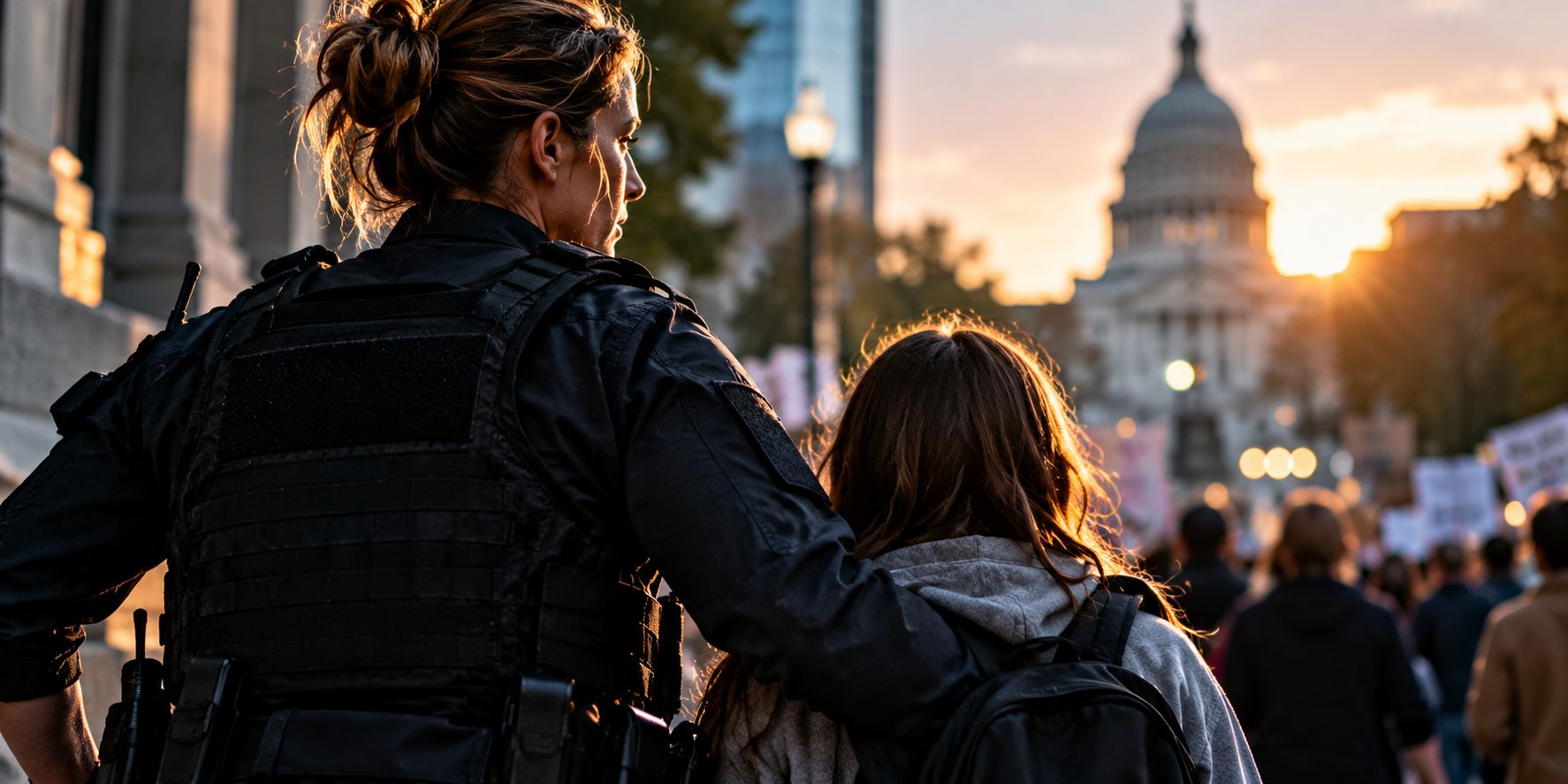
Every village has something outside the firelight that wants what it has.
Wolves. Raiders. Floods. A neighbor with more spears than sense. Every village that lasted long enough to become a town had someone who looked out into that dark and thought, Not tonight. Not here.
That someone was the Warrior.
Around the First Fires
The Warrior’s job was the simplest to describe and the hardest to do: stand between the village and whatever would destroy it.
That meant keeping watch while others slept. It meant facing the predator that came too close, meeting the raiding party before it reached the huts, and holding the line at the river crossing long enough for the children to get clear. It meant being the one who ran toward the noise.
But the Warrior didn’t only fight outsiders. Every village has threats inside it, too: the bully, the cheat, the one who takes more than their share, the rot nobody else wants to name. The Warrior was often the one willing to say it out loud and face the consequences.
The Warrior makes sure there’s still a village in the morning.
Where You’ll Find Them Today
You’ll find Warriors in uniform, of course: soldiers, police, firefighters. But you’ll also find them in courtrooms, in newsrooms chasing the story someone powerful wants buried, on picket lines, in union halls, at school board meetings, and in the one person at the office who will tell the boss the plan is wrong. You’ll find them in the parent who would walk through fire for their child and in the friend who shows up when you’re in trouble.
Warriors can be anyone. Men and women, quiet and loud. The seat isn’t about size or aggression. It’s about what wakes them up.
The Warrior is fueled by real stakes. When something that matters is on the line, the Warrior becomes calm, clear, and fully alive. Crisis doesn’t rattle them. Crisis focuses them. What rattles a Warrior is the long stretch where nothing matters at all.
Warriors come in two kinds.
The Offensive Warrior
The Offensive Warrior goes out to meet the threat.
Around the first fires, this was the person who didn’t wait for the raiders to reach the village. They went out to find them first, or went to deal with the pack of wolves before it could take another goat. They struck the problem at its source.
Today, the Offensive Warrior is the litigator, the activist, the investigative reporter, the organizer, the prosecutor, or the person who reads about an injustice and starts making calls. They are the one who says we are doing something about this, today. They’re fed by engagement: the moment of taking the fight to the enemy.
The Offensive Warrior keeps threats from growing. Without them, a village only ever reacts, and by the time it does, the problem has already moved in.
The Defensive Warrior
The Defensive Warrior holds the line.
Around the first fires, this was the person on watch at the edge of the camp, the one who built the wall and knew every weak spot in it, and the one who would not move from the gate. They didn’t go looking for the fight. But when the fight came, it went through them or it went nowhere.
Today, the Defensive Warrior is the security professional, the lifeguard, the bodyguard, the protective parent, the compliance officer who won’t sign, the teacher who stands between a bullied kid and the pack, and the friend nothing gets past. They’re fed by the knowledge that what they’re protecting is safe because they’re there.
The Defensive Warrior makes sure there’s something to come home to. The Offensive Warrior carries the fight out. The Defensive Warrior keeps it from ever getting in.
When the Warrior Is Fed
A fed Warrior is one of the calmest people you’ll ever meet. That surprises people. They expect Warriors to be hotheads, but a Warrior with a real cause is steady, focused, loyal, and oddly peaceful. They have a place to put their fire, so the fire stays where it belongs. They’re the person you want next to you on the worst day of your life.
When the Warrior Starves
Here’s the problem: most modern warriors don’t have a war to fight. Not a real one. Not one with stakes that matter and an enemy that can be faced.
And a Warrior with no war doesn’t stop being a Warrior. It goes looking for war.
The starving Offensive Warrior picks fights. In traffic. In the comments section. At the family dinner. With the coworker who said something slightly wrong. They become the person who always seems to have a nemesis, and when one enemy goes away, another appears. They argue for sport and win battles that never needed fighting.
The starving Defensive Warrior sees threats everywhere. They lock down, check the locks again, and treat every new person as a possible danger. They become suspicious, controlling, and hypervigilant, guarding a gate that nobody is attacking, and exhausted from holding a line no one is testing.
We call these things anger problems, aggression, paranoia, and being difficult. Sometimes they are. Very often, they’re a Warrior with no war, and the fire has to go somewhere.
Starve a Warrior long enough and the fire can go out entirely. We’ll talk about that another time.
Feeding the Warrior When Life Won’t
Find a real fight. The world is full of them: an injustice in your town, a cause that deserves defending, a person who needs someone in their corner. A Warrior with a worthy enemy stops picking fights with unworthy ones.
Put stakes in your body. Martial arts, boxing, hard physical training, wilderness challenges — anything where effort has real consequences. A Warrior’s body wants to know it can meet the moment.
Offensive Warriors, pick your battles on purpose. Decide what’s worth your fire and spend it there. Every fight in traffic is fuel stolen from a fight that matters.
Defensive Warriors, guard something that needs guarding. Volunteer, coach, mentor, protect. Give your vigilance a gate worth watching, and let yourself stand down from the ones that aren’t.
Tell the people around you what you are. A Warrior who knows their own engine can say, “I’m spoiling for a fight, and it isn’t you.” That one sentence has saved a lot of marriages.
*****
In peacetime, villages have always been a little uneasy about their Warriors. The Warrior’s fire is unsettling when there’s nothing for it to burn. But when the wolves come, everyone remembers who they’re for.
So here’s the question for this week:
What’s the last fight you were in that actually mattered, and how did you feel while you were in it?
Next time: the Cleric.